

Engineering Safety: A Case Study of Volvo’s Whiplash Protection System
This case highlights the role of engineers in vehicle safety. Whiplash is one of the most common causes of injury in traffic accidents. Although whiplash-associated disorders are not life-threatening, symptoms can have significant and lasting impacts on quality of life, and, historically, female drivers and passengers have faced higher rates of injury. In the 1990s, Volvo reengineered its seating system to mitigate these risks, despite the absence of a scientific consensus on whiplash injury mechanisms. This case explores how Volvo engineers made decisions about design requirements and corresponding testing procedures for new whiplash prevention technology amidst this uncertainty.
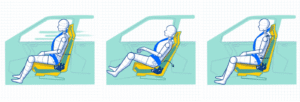
Illustration of Volvo WHIPS Seat by Yen Azzaro (C-SED 2026).
Key Questions Discussed in Case Study Materials
- How does the problem of whiplash reflect sociotechnical issues in engineering?
- What assumptions about users are embedded in the design of automotive safety technology and testing?
- What responsibility do engineers have to account for human variability in their solutions to engineering problems?
Core Learning Activities
- Reflect on how consumers without engineering expertise evaluate the safety of vehicles
- Explore the design of Volvo’s WHIPS technology and predict its effectiveness
- Propose a testing strategy for WHIPS and compare with Volvo’s testing procedures and results
- Discuss the responsibility of engineers in accounting for human variability when developing and testing engineering solutions
Key Themes
- Automotive Engineering
- Automotive Safety Features
- Automotive Crash Testing
- Biomechanics
- Dynamics
- Engineering Decision-Making
- Engineering Standards
- Design for Human Variability
- Design of Testing Strategies
- Socially Engaged Design Process
What Do You Get?
Facilitated Learning Package
For instructors teaching the material in an 80 minute session.
- Instructor Orientation Guide
- Lesson Plan for 80-minute class session
- Student Pre-Work
- Slide Deck with Facilitation Notes and Supplemental Annotations
- Student Worksheet
- Assessment Questions
- Independent Learning Version of Case Text
- Supplemental Reading for Instructors
- References
Independent Learning Package
For learners to complete asynchronously.
- Instructor Orientation Guide
- Independent Learning Version of Case Text, with embedded Student Analysis Activities to Complete Independently
- Supplemental Reading for Instructors
- Assessment Questions
- References
Where Might You Use This Resource?
Read about how one mechanical engineering instructor used the Volvo case to situate quantitative problems in his dynamics and vibrations course in a real-world scenario.
Examples include:
- First-Year Industrial Operations foundational design course
- Sophomore Mechanical Engineering dynamics and vibrations course
- Biomedical Engineering capstone course
Use this resource package to teach an 80 minute session.
Use this resource package for independent student work or asynchronous teaching.